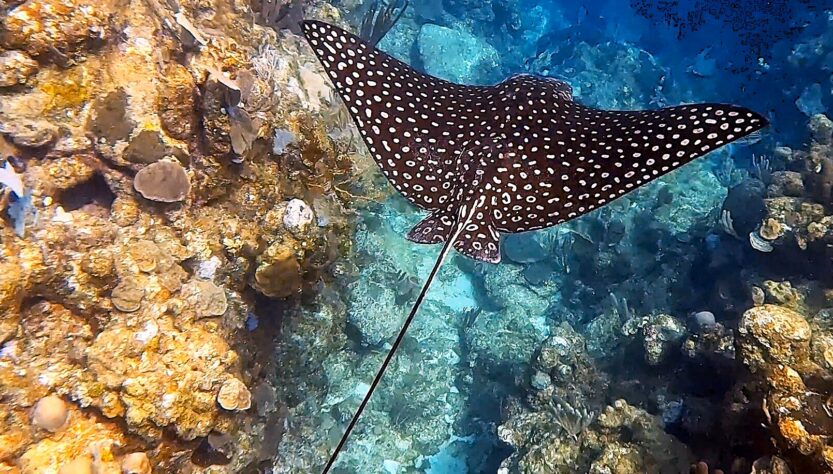
Story, videos and photos by Steve Frankham, except where credited. Cover photo (spotted eagle ray) courtesy of Daniel Z.
Why dive in Komodo?
The islands of Komodo National Park might have gained their fame for their huge, venomous dragons that stalk this mosaic of protected land and sea. Indeed, the dragons and the wild islands they inhabit are stunning, but for divers, the magnificent reefs and marine life are equally legendary. Having spent a couple of weeks diving and working with conservation projects in Komodo last year, I can honestly say that this is one of the finest places I’ve ever had the pleasure to dive.
A psychedelic rainbow
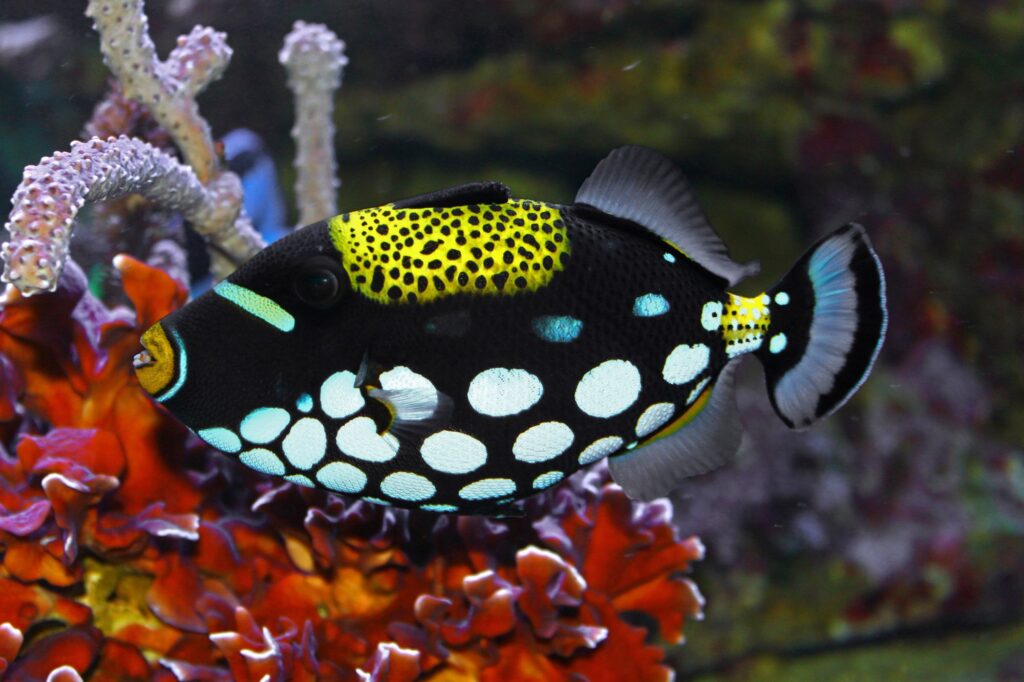
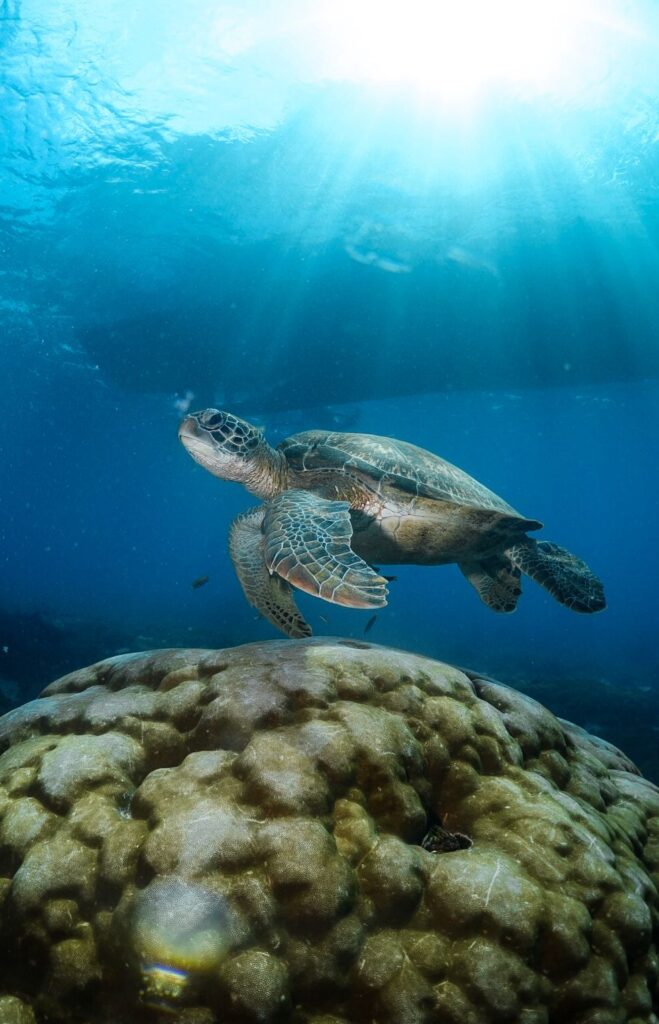
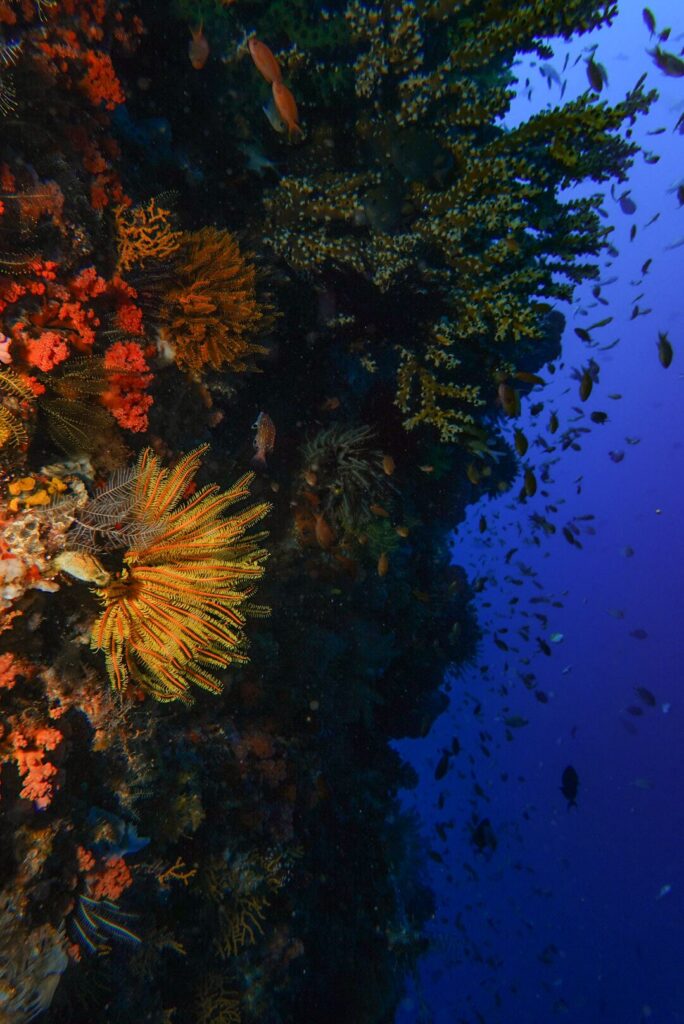
Being part of the Coral Triangle, the most biodiverse part of our blue planet, the sheer variety of fish species and corals takes your breath away. Each time I put on a mask, hundreds of species revealed themselves to me. Komodo is a psychedelic rainbow of colour emerging from the deep blue. What struck me most was the sheer diversity of the dive sites. Beautiful coral gardens, walls, submarine pinnacles, caves, even muck dives. There is truly something for everyone. Mirroring the physical variety, there’s something for lovers of all forms of marine life, from sharks and giant manta rays (Komodo is one of the world’s best places to dive with mantas) and sea turtles, down to micro life and nudibranchs.
A coral haven
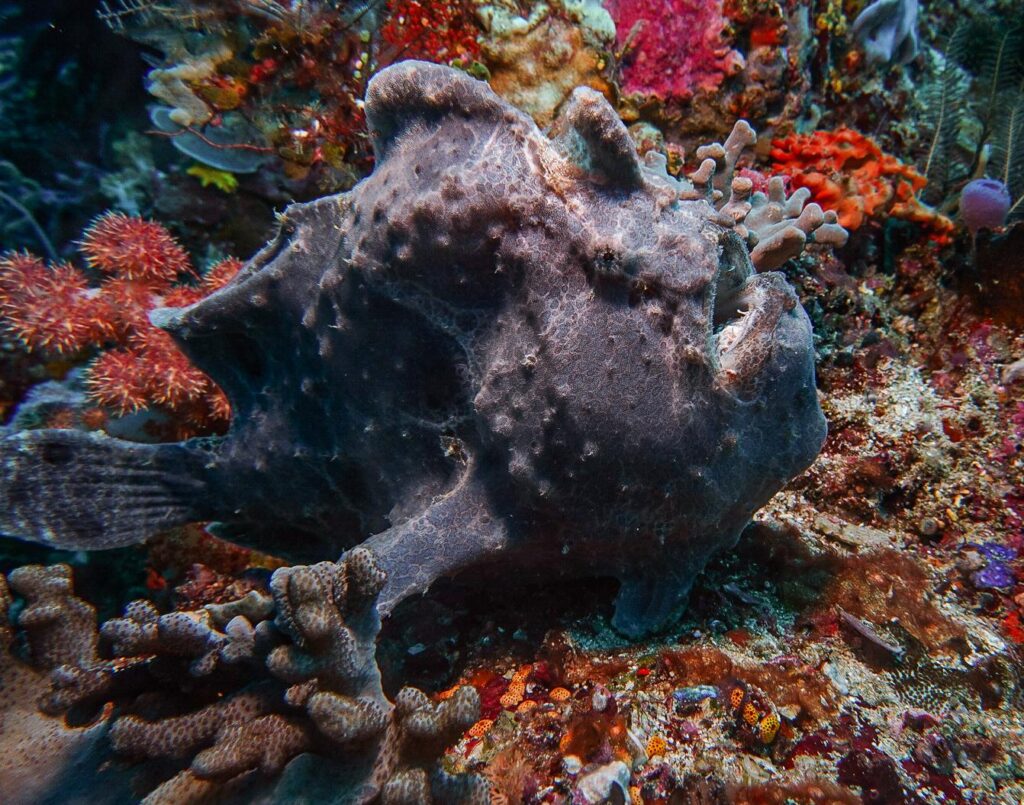
Another surprise, in a world increasingly affected by climate change, where large-scale coral bleaching is becoming a yearly event, is the excellent condition of Komodo’s reefs. The reason is generally acknowledged to be due to strong currents flowing between the Indian and Pacific Oceans here. The currents bring up cooler water from the depths, along with abundant nutrients – and, so far at least – this has protected Komodo.
A note of caution
In relation to the strong currents, I would highlight that many of Komodo’s sites may not be suitable for ‘beginner’ divers. Make sure you discuss this with your instructor/dive operator if you have any doubts. Currents are usually less strong during the quarter moon.
I do not claim to be an ‘all-knowing’ expert on this region, but what follows is a short list of my favourite dive sites in the Komodo National Park. I hope you will enjoy!
THE CENTRAL ISLANDS
Manta Point/Karang Makassar
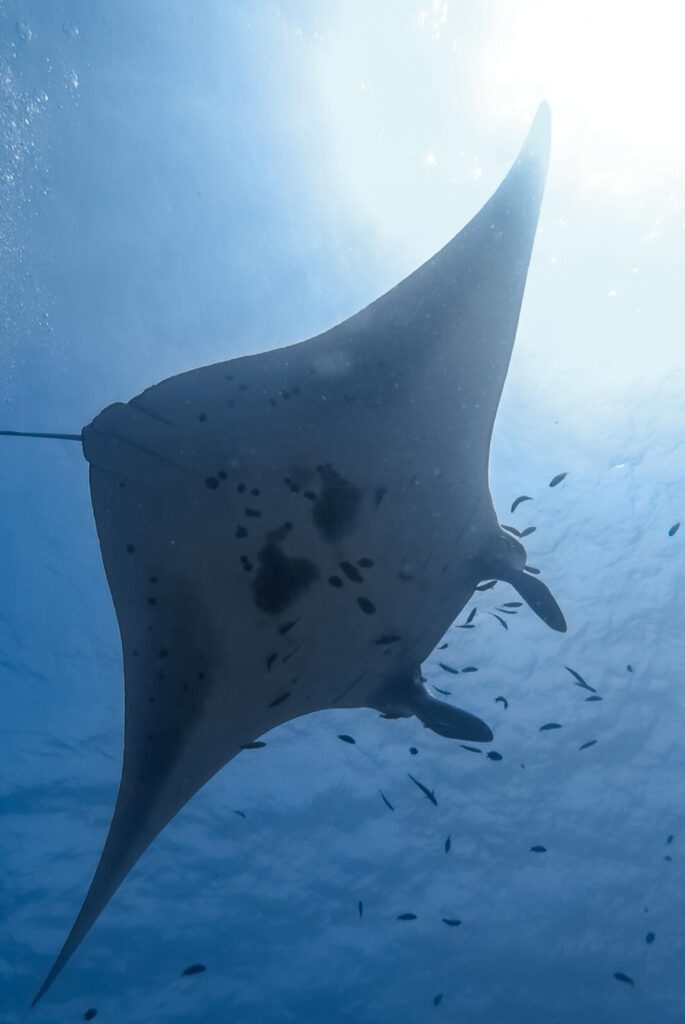
A famous dive and snorkelling spot in Komodo National Park, Manta Point is a drift dive, coveted as a reliable location to encounter manta rays, and other large marine life. Sea turtles are commonly seen. On this dive, I also spotted a Napoleon wrasse. In terms of marine scenery, this certainly isn’t the most spectacular dive site in Komodo. It’s a relatively flat area of seafloor, composed largely of coral rubble; however, even here, there is plenty of life. The rubble areas are punctuated by many healthy coral bommies that push up from the seafloor, each seething with life. Mantas can be seen here (as at Mawan, below), year-round, but are particularly abundant in their mating seasons of May and October, when ‘manta trains’ and dancing can be observed.
Mawan
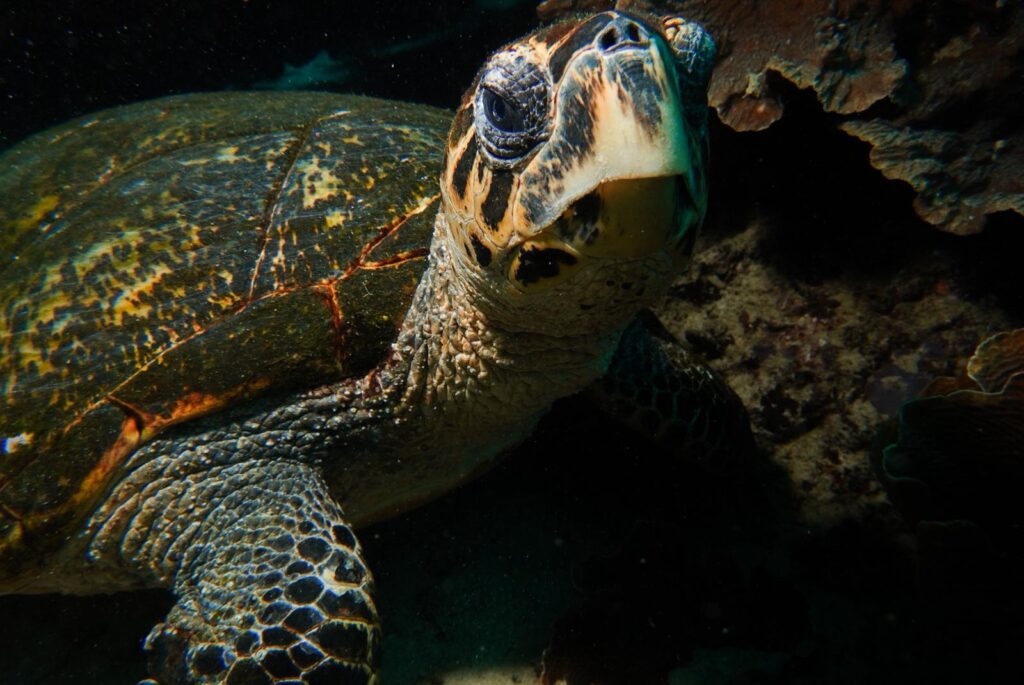
Another famous spot for encountering manta rays and big marine critters is Mawan. This, in my opinion, is a better dive site, in the sense that the relatively flat-bottomed zone, located between two islands and often flushed by powerful currents, is crowded with magnificent, healthy corals. Mantas are often found hanging and circling in the current. They use this locale as a ‘cleaning station’ with wrasse picking off parasites from their skin. The southern section, where the dive often ends, features a sandy slope and is an another major manta cleaning site. There’s a good chance of spotting blacktip reef sharks and Napoleon wrasse, but even setting aside the ‘big stuff’, this reef is teeming with action! Orange banded surgeon, unicorn, parrot, clown fish, and groupers abound. Truly a ‘something for everyone’ dive site.
Tatawa Kecil
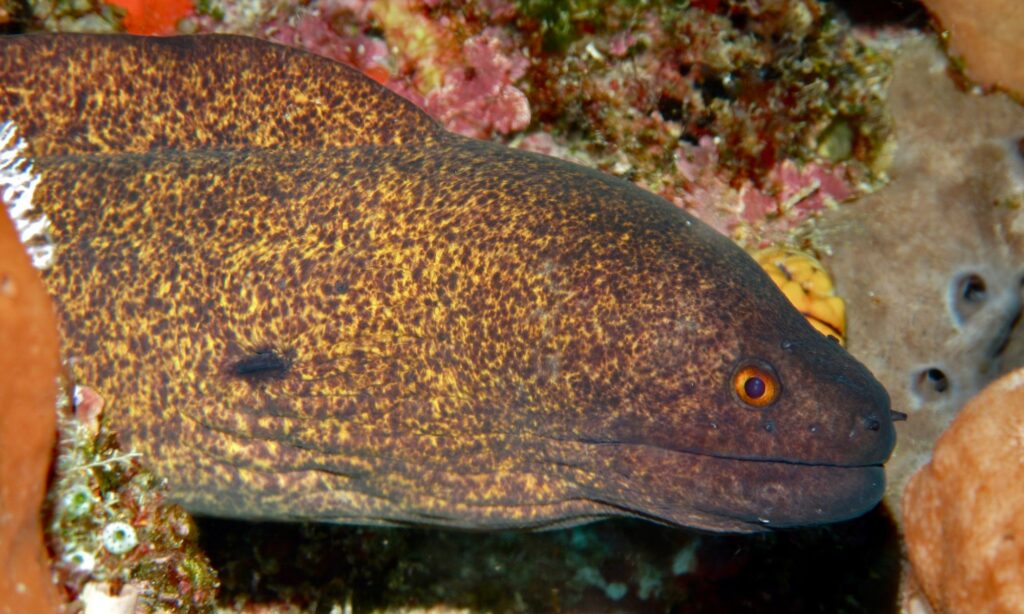
In a place like Komodo, you’re spoilt for choice with beautiful dive sites, but in terms of the magnificence of the reef, the colours and sheer variety of fish species, I think Tatawa Kecil was my favourite. The dive site, in front of a small, rocky island, is swept by powerful currents on both sides. Indeed, at times of stronger tides, diving here might be impossible – but everywhere you look, there is life. Corals of every form and colour, and also a thrilling cavern swim through, crowded with marine life. Look out for Napoleon wrasse, yellow-edged morays, sweetlips and sharks.
Sebayur Kecil
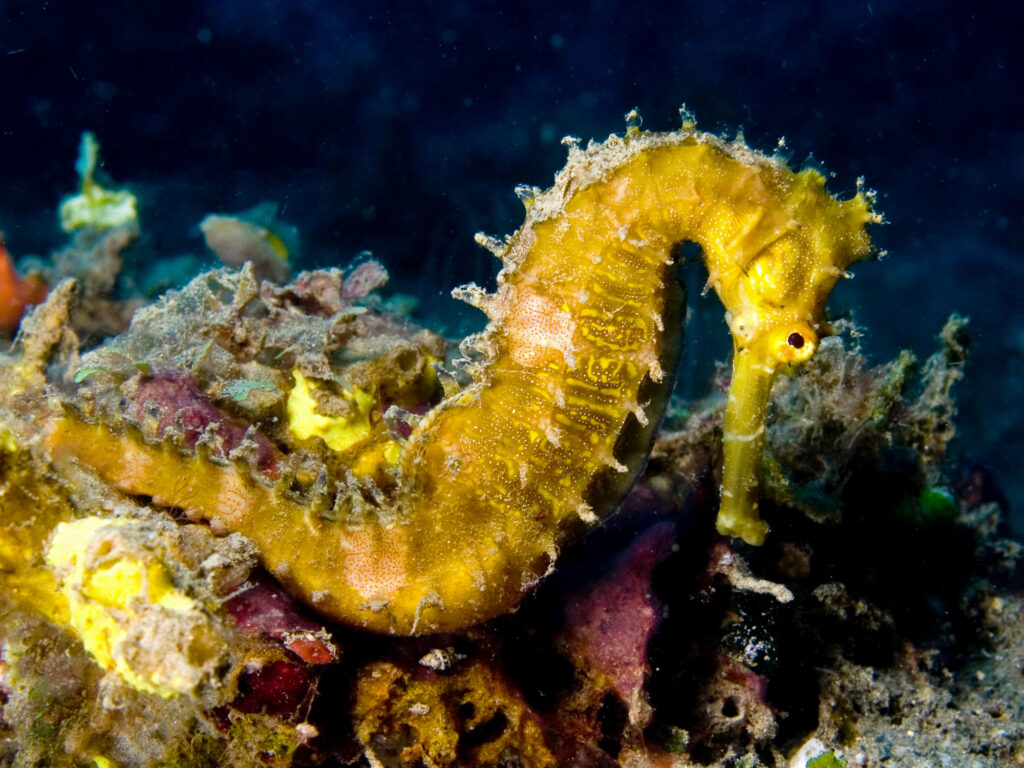
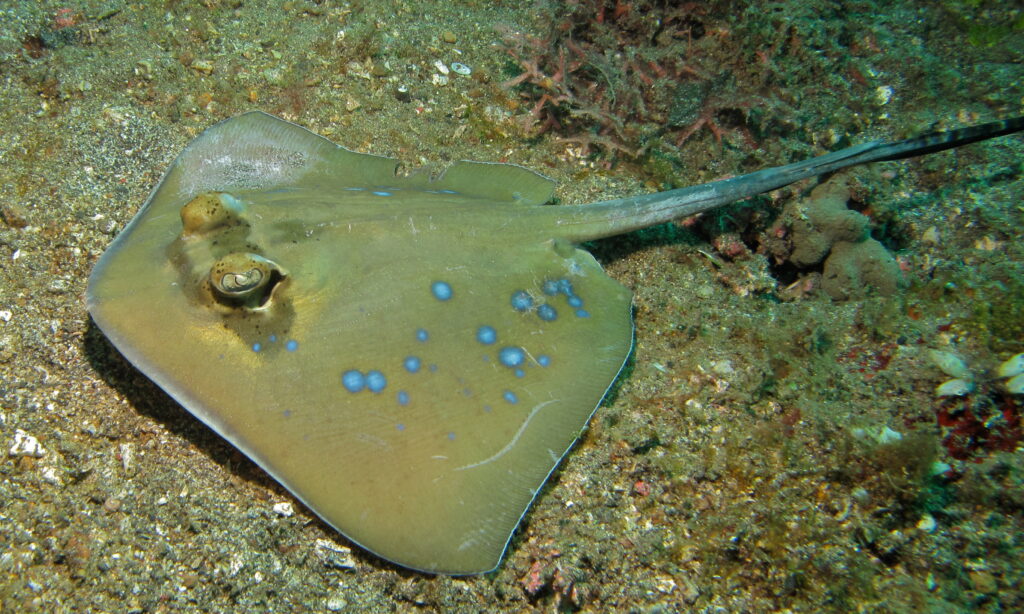
A really nice dive, especially where the flatter ‘finger’ of the reef drops away into deeper water. This reef edge, as is often the case, is thick with colourful corals and barrel sponges. Sebayur is particularly beautiful in times of high visibility (30m +). This is a great place to spot schools of blue-striped snappers and turtles. In the sandy sections between the reef formations, keep a lookout for blue spotted stingrays and banded snake eels searching for tasty morsels. This is a good site for macro life such as seahorses, nudibranchs, and velutnid snails.
Tatawa Besar
A lovely drift dive between two underwater promontories. The reef here, in addition to fabulous hard coral cover, features many bommies crowded with a spectacular yellow soft coral species. There are lots of enormous barrel sponges. In the sponges look for glassfish, and the leaf scorpion fish that hunt them. There’s plenty of fish life, although mostly smaller species. Also had the pleasure of encountering green turtles and Napoleon wrasse here. Keep your eyes peeled for octopus and sharks.
Siaba Besar
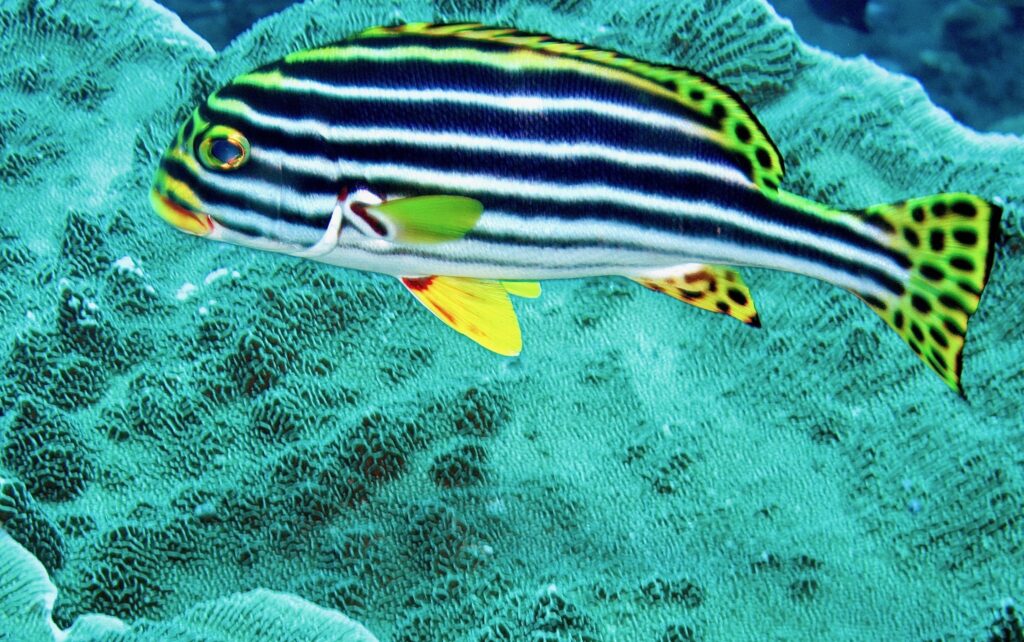
A notable dive in an inlet at Siaba Island. Here, rising from a sandy bottom is a gentle coral seamount. It’s almost entirely encrusted in hard corals – cabbage, table, and branching corals everywhere – like a giant living carpet! Look out for titan triggerfish, oriental sweetlips, sea turtles, barracudas, puffer fish, and giant morays! The outer, unprotected side of the promontory can be subject to strong currents!
Police Corner
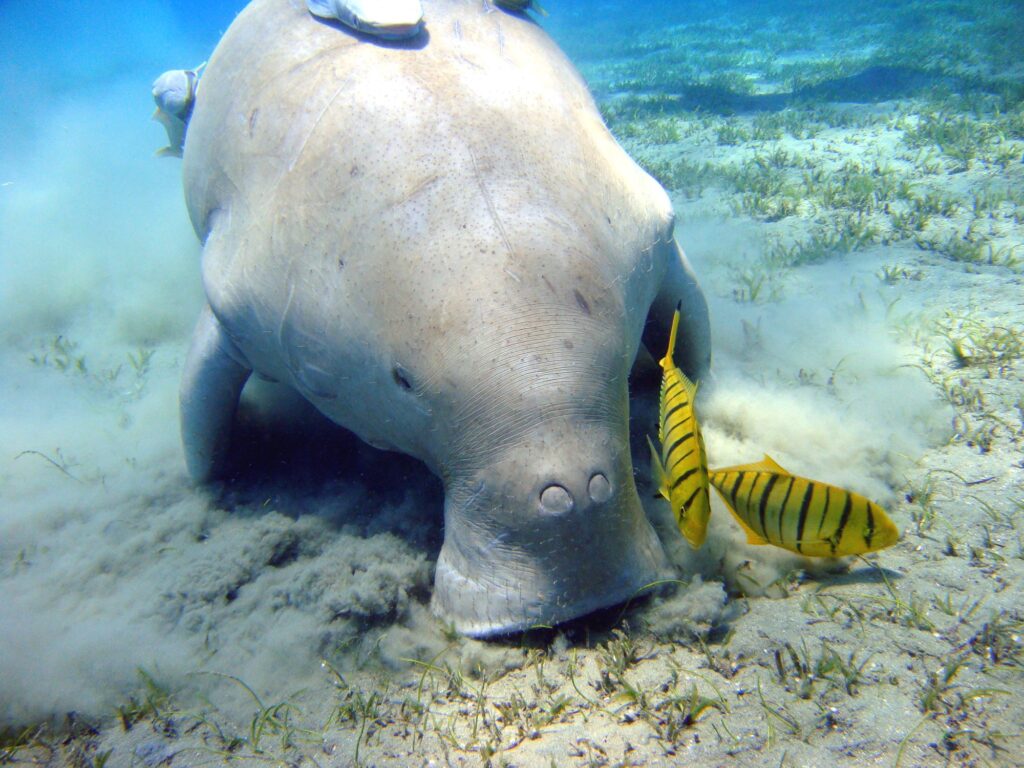
Another beautiful coral slope, with every inch crowded with corals. The ‘special’ features of this site are the magnificent coral overhangs at the steep edge of the reef, brimming with life. There are dense schools of trevally, unicorn fish, and two-spot snappers, along with Moorish idols and six-bar angelfish. The reef above is awesome for turtles, many species of angelfish, and titan triggerfish. On this reef, I was lucky enough to catch my first glimpse (from a distance) of a spotted eagle ray. A deeper dive site, this is a good place for nitrox diving. If you’re really lucky, dugongs can be seen here!
THE NORTHERN ISLANDS
Castle Rock
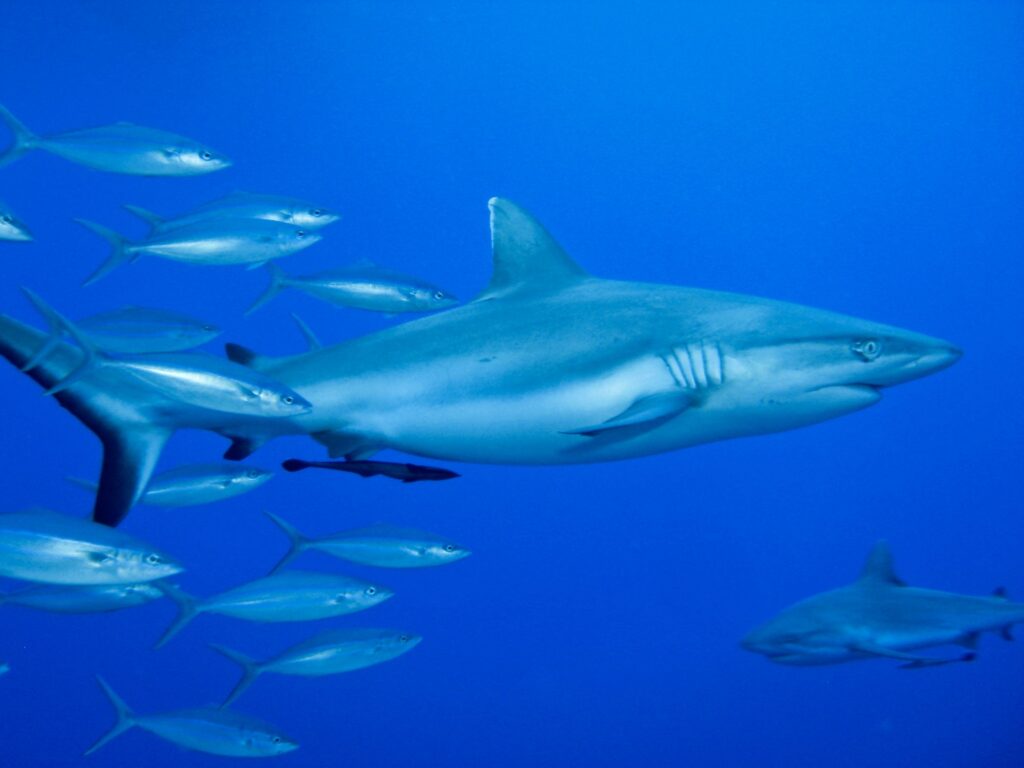
Castle Rock, like nearby Crystal Rock, is a deeply ‘pelagic’ diving experience. The site is a marine pinnacle rising sharply out of the deep blue. It’s a dive site to appreciate for sharks (mainly whitetips), dog-toothed tuna, and giant trevally, which are commonly seen patrolling the reef’s drop-off. The waters above the reef are crowded with great shoals of fusiliers. Because of the strong currents here, you may have to use a ‘current hook’ and let the show come to you! As this site is completely submerged (the pinnacle rises to around 4m from the surface), a knowledgeable captain is essential to know where to drop divers. If dropped in a bad spot, you could end up fighting the current or missing the site entirely!
Crystal Rock
My favourite dive in the ‘Northern Islands’, Crystal Rock, another pinnacle rising out of the open ocean. Crystal somehow manages to combine the pelagic action of Castle Rock (abundant sharks, tuna, and trevally) with some truly magnificent coral formations, overflowing with puffer, clown, and trigger fish, angel fish and antheas. Another dreamy dive site that covers all the bases!
The Cauldron/Shotgun
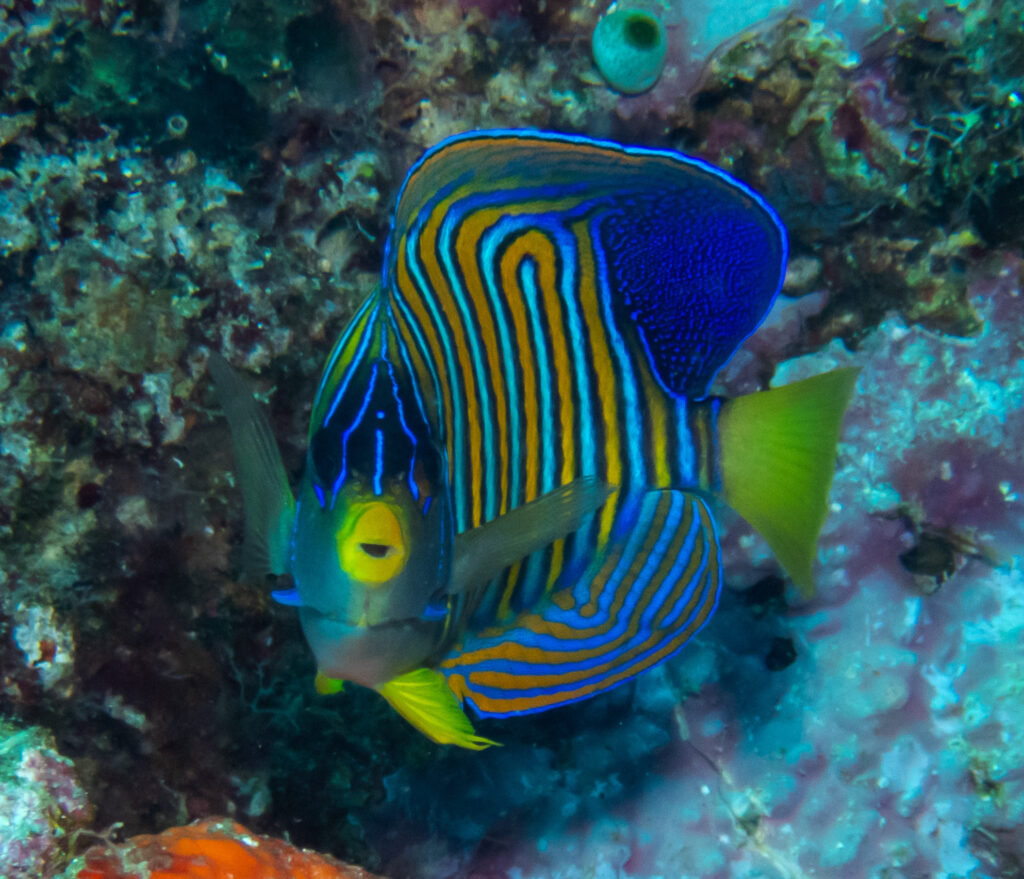
As the name suggests, this is a dive for adrenaline lovers, and something I’ve never experienced anywhere else in my time as a diver! The dive begins in fairly mellow fashion, heading along a flat-bottomed channel, covered with nice table and branching corals, and plenty of huge barrel sponges. There’s plenty of fish life, including map puffers, clown triggerfish, pipefish, and spadefish. You then swim down into the deep, sand-bottomed circular depression that is The Cauldron, which focuses the current to such a degree that it feels as if you’re being blasted around in a washing machine. The only fish that seemed comfortable with this were a large school of big-eye trevally, some of the ocean’s best swimmers, casually holding position in front of me, while I was forced to cling to a boulder with a current hook. Even my bubbles were blasted back horizontally!
On leaving The Cauldron, you are spat out by the whipping current into a channel between two islands, the corals zooming past beneath you. This is the Shotgun! It’s like skydiving underwater. All the while, I’m trying to remember Fabi’s (my dive master’s) instructions to fin hard to the left, after the exit from the Cauldron. There’s a lot of lovely coral here as well, with abundant angel fish and sweetlips around the area where we performed our safety stop. An unforgettable dive! Another site where dugongs are sometimes spotted!
MARINE CONSERVATION IN KOMODO
As divers, we are privileged to experience a different world, and one of breathtaking magnificence. From this position of privilege, I feel it is also our responsibility to protect this world for future generations. Komodo attracts large numbers of divers – as such, our behaviour can have a major effect on the reef, either positively or negatively.
Reef rules
Obviously, the standard rules apply – never touch the reef or marine life, maintain good buoyancy, and never pursue the reef’s inhabitants. Unfortunately, I witnessed two particular divers, who, despite being told otherwise, insisted on chasing marine life around the reef for that perfect ‘selfie’ or Instagram shot. This irresponsible and selfish behaviour is stressful for marine life. Also, in the case of larger species, such as grey reef sharks, sting rays or titan triggerfish guarding young, can illicit a violent defensive response.
Always choose a dive operator that emphasises environmental responsibility and sustainability. Boats should avoid anchor damage to reefs, and dispose of all waste safely. Ideally, operators should actively contribute to conservation programs in Komodo. On all these fronts, I can recommend Dive Komodo.
Dive Operators Collaboration of Komodo (DOCK) is an association of dive operators committed to the preservation of the national park’s marine environment.
How can I actively help?
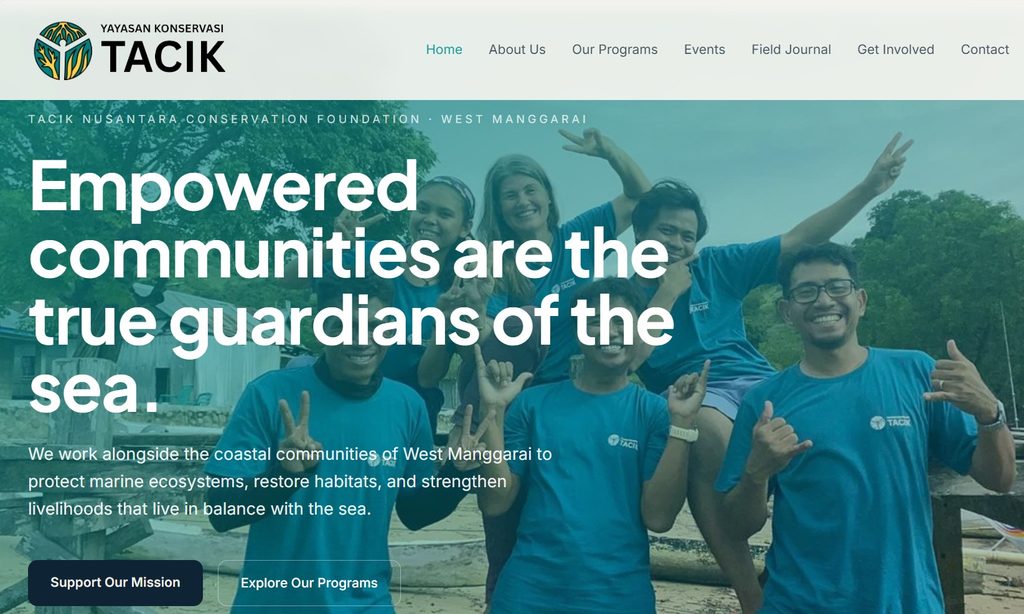
Our oceans are under threat as never before, facing the combined threats of climate change, pollution, and unsustainable fishing practices. How can you help? There are many ways. Trash Hero often organises beach clean-ups in the area. Contribute to local NGO’s working to restore the reefs around Komodo. Volunteering might also be a possibility. Konservasi Tacik is currently undertaking a reef restoration project south of Labuan Bajo at Golomori. There are many ‘citizen science’ projects, such as Manta Watch, where divers can help contribute to our knowledge of Komodo’s marine life.
To learn more about marine conservation in Komodo and the threats facing the park, check out my article:
Below is a list of conservation organisations active in the Komodo region:
You can donate to Konservasi Tacik through GoFundMe at:
Fundraiser by Sofia Tedestam : Empower Indonesian Communities to Protect Marine Resources
And find out more at:
https://www.konservasitacik.org
https://www.facebook.com/konservasitacik
or on instagram at:
https://www.instagram.com/konservasitacik
Dive Komodo offers excellent, environmentally friendly PADI diving services from Labuan Bajo. They cater to liveaboard and daytrip divers. The company is one of the pioneering dive operators in the region. DK have been exploring the marine world of Komodo for more than 30 years.
MantaWatch has been working with conservationists and citizen scientists in Komodo for many years.
Manta Ray Conservation – MantaWatch
Trash Hero organises beach clean-ups in Flores and more widely across the region. Help rid the marine environment of plastic waste, and meet some awesome people (locals and travellers) at the same time!
Acknowledgements:
This article would not have been possible without the help of many wonderful, passionate divers and conservationists on Flores. Firstly, I would like to thank Sofia Tedestam, of Dive Komodo and Konservasi Tacik. Her energy, knowledge, and trust were invaluable. A round of applause to all the staff at Dive Komodo, with a special call out to wonderful dive guide Fabi, and Jordy Locke. Jordy supplied many of the spectacular underwater images in this article. Your knowledge and patience are greatly appreciated. I must also credit the staff of WWF Komodo, Ica Marta, and Andrew Harvey, Founder of MantaWatch, for your insights and knowledge. Thank you to Abizar Ghiffary (Abi) of Tacik, for your great local knowledge and positive vibes. Lastly, I’d like to thank the kind, generous people of Labuan Bajo and Flores! I hope to return soon.
I miss those moments mr, only hope to return there as the tide allows me to. Keep it up, and trully bless you. Regards
Your welcome Hans…hope to dive again together soon!